Sunday, June 3, 2012

Santa Marta, Colombia


The next portion of our passage west and now somewhat south is 120 miles and with the wind and seas still up we decided to hug the coast and see if a day hop was a possibility. After our hair raising passage around Cabo de Vela a calm and flat sail to Santa Marta was very much anticipated. Dolphins came out
to greet us as we made our way down the coast, always a good luck sign for a smooth sail. 


A perusal of the open road stead off muddy Rioacho did not strike us as an anchorage for the night and so it was determined that an overnight passage to Santa Marta was the best course of action. With a full moon for our night sail, we passed the Five Bays a little before dawn and made landfall at Santa Marta just at sunrise. 


Santa Marta is a busy port town as well as a weekend destination for locals. There is a large marina here now that makes entry into the country much easier than it use to be, although Colombia is still requiring the use of an agent for processing all your paperwork for immigration, port captain, and customs. Tying up to the dock was a luxury we indulged ourselves in as there is so much dirt and diesel fuel everywhere from Bonaire, Curacao, and the anchorage under the airport in Aruba that the thought of unlimited amounts of fresh water almost has us drooling. We have renamed the ABC’s the wind and dust islands and other than the fantastic diving in Bonaire they will remain on our least favorite islands list. 


Founded in 1525 by the Spanish conquistador Rodrigo de Bastidas, Santa Marta is the oldest city in Colombia and the second oldest in South America. The famed Venezuelan born Simon Bolivar who liberated South America from the oppressive rule of the Spanish is buried here and the streets are picturesque, full of beautiful historical buildings, and swept clean nightly. 


Local colorful buses are cheap and frequent and one of the best things Don and I love about being back in Latin America, public transportation is everywhere and convenient. The malacon along the waterfront was the place for delicious local food and we indulged in fried corn arepas with local farm cheese, freshly barbecued skewers of chicken, beef, and sausage known as pinchos, and small cups of the best ceviche I have ever had! 


A stop was made at the Starbucks of Colombia, and a small shot of rich Colombian coffee helped to fuel our wandering.


Plazas with the requisite cathedrals are everywhere, some shady and a welcome respite from the oppressive heat, and some blinding in the sun. This cathedral was not open for viewing and the plaza empty of people in the Sunday afternoon heat. Sunday is my favorite day to take photos of historical buildings as there are less people and cars about. Huge doors are a hallmark of colonial Spanish architecture as it was custom to keep horse stables on the ground floor of the inner courtyard where they were well protected. Usually made of incredibly thick wood and heavy, sometimes beautifully carved and ornate, doors always catch my camera’s eye.


Being a builder and well versed in many types of materials, Don is always fascinated with the many layers of construction seen in ancient and abandoned buildings. 


The ornate scroll work of the balconies and brightly colored vines of bougainvillea meandering aimlessly contrast sharply with the ancient plaster and sheet metal and puts a whole new meaning to the words reuse, recycle, renew! 


Brick, wood, glass, limestone, gravel, rock, and later cement all make for an interesting pictorial study in texture and color. 
Even though some buildings looked old and discarded on the outside, the inside courtyards are made for shady escapes, cool and inviting. 


This abandoned building’s beautiful doorway immediately caught my eye, and the polished and ornate staircase inside and courtyard beyond had me seriously eying the sign posted on the wall. 


On our way back to the boat and in the midst of tall glass high rises and cement, this Victorian era building seemed out of place, appearing displaced by its' modern surroundings. A cross between the Bates Motel and the home of the Addams Family, it belonged to a Spanish general and now is undergoing extensive restoration. Santa Marta has been a welcome stop, beautifully historical, the marina modern and convenient, and the Colombian people as friendly as we remember. Next stop.....Cartagena!

Friday, June 1, 2012

Cabo de Vela... the Gateway to Colombia


After four and a half years of cruising the windy Eastern Caribbean chain, the Starship is finally returning to the mas tranquillo waters of the Western Caribbean. It has been a month and a half of waiting for the right weather window to go west and studying every weather model we can find. May is suppose to be a transition month , a time when the tradewinds decrease and traveling the trecherous Colombian coast and around windy Cabo de Vela becomes somewhat easier. Only March decided to stay until May this year and again Don and I hear what usual weather the world is having. A discussion with some local kite boarders who were very excited that kite boarding season is about to begin and so the promise of MORE wind, the captain decided we had to go west...NOW. Picking the best window available and avidly listening to Chris Parker the weather guru, the anchor was lifted at 03:00am and we headed out into the inky blackness of a moonless night. Under sail for the first five or six hours in 6-8 foot following seas and a brisk 20 knot wind at our backs, all on board were excited to finally be on the move.


Trolling along at 8-9 knots took us through a school of small Mahi Mahi and Mike scored us some lunch and dinner fare. These dorado were very small and after several hits the lines were pulled in as our stomachs and freezer could only accommodate so much fresh pescado. 


Cabo de Vela is the dividing line between the Eastern and Western Caribbean and on the boarder of Venezuela and Colombia. This passage from Aruba to Colombia is known as the roughest in the Caribbean and Cabo de Vela is considered one of the five windiest Capes in the world. 


Predictably as we approached the wind picked up to 25 knots and gusting higher. Though the wind was at our backs the seas picked up as well and the Starship was surfing her way down 10-12 foot swells, averaging 10 knots and sometimes hitting 15 on the downside of the swells. Our new autopilot was no where near capable of steering in such large seas and hand steering with some help from the engine made for a quick albeit nail-biting passage. 


As we turned the corner making our way into a protected anchorage tucked just under the Cape, all on board were happy to drop the hook at sunset and make the appropriate sacrifice to King Neptune for our arrival. 
Below is Don’s description of our trip via email and we both agree that this passage lived up to its dreaded reputation. 


Tied up to a Marina, spent the morning washing the boat to rid it of all the crusted dirt from Bonaire to Aruba. Aruba being the worst. We waited in Aruba for 3 weeks for a weather window and none came, then a small window where the winds died to 20K with 25K gusts and 8' seas so we went for it.  The wind right now is blowing 25 with 32K gusts for the next few days, and we got in right before it picked up.What a ride, the Cape is one of the 5 worst wind places for sail boats traveling around the world, and it lived up to its rating in my book. Had to hand steer all the way, even the new auto pilot could not handle the 8' seas which actually were 3 meter seas which is really 10" and then there are the swells that go much higher, where did they come from?????? Left at 3:00am and the first 60 miles was easy, but then as we approached the cape it picked up with 3 meter seas and higher winds, average of 10 knots for the day, as we passed Cabo Vela right near dusk the wind kicked up another notch and the seas built to over 3 meters so I headed in to the Cabo and anchored for the night.  Left the next morning and sailed most the day then the wind died and motored the rest of the night around to Santa Marta. Many times surfed  down the waves at up to 15 knots, had to run the engine a lot to control the boat from breaching, two jibs up, and we made it.  I will never ever ever make that trip again, and that was a good passage.  Now it time for sleep, have not had much in the last 4 days.


Cheers and have a cold one for us!

Starship


We are very grateful for our beautiful and well-founded boat Starship who has repeatedly delivered us safe and sound over thousands of miles and thru all types of weather. A quote from our favorite on board film expresses our sentiments exactly ....”She is not an aged man-o-war......no....she is in her prime!”

Saturday, May 19, 2012

Aruba Arrival


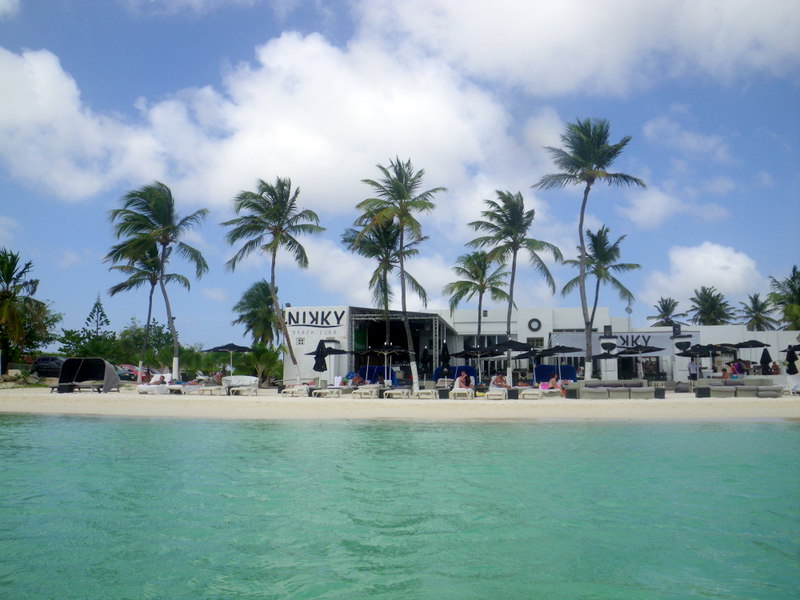
After a week of high winds while sitting in Curacao, the Starship has finally made it to Aruba. The weather gods are not with us at this time and after picking up another crew member Daniel who needed a ride to Panama we managed to find a short window across to Aruba before the heavy tradewinds set in. Now we are anchored off the airport in front of a delightful beach bar called Nikky's and the wind is howling 25-30 knots and predicted to continue for the next week. 


Daniel is from Argentina and an avid hunter gatherer. After a few days of sitting around and watching the wind blow he and Mike trolled in the dingy and brought us some fresh snapper and small barracuda to snack on. 


Aruba is known as the Las Vegas of the Caribbean, complete with cruise ships, casinos, health spas and high end resorts with corresponding high end prices.
An Aruba Arriba and a beer set us back $16.00 and we are already searching for the local market hopefully with some prices more fitting to our budget.    


As per our usual routine we rented a car to tour the island and tried to locate a laundry and a propane filling station. Aruba reminds me of a large glittering ice cream cake and it is very pink. The beaches are beautiful yet crowded, and every water sport is available. Windsurfing, snorkel trips, day sails, kiteboarding, scuba diving, and every restaurant you can imagine from Senor Frog's to Burger King to Hooter's.


A trip to the windward side to check the seas and wind just reinforced to us the need to stay put until things calm down and the weather forecasts are to Don's liking.


So we will wait and do what the sign says....Chill! I wonder how much a couch costs???


Tuesday, May 8, 2012

Curacao and heading West

Red skies at night....a sailor's delight appeared the night before our departure from Bonaire to Curacao ensuring a delightful downwind sail. All company has gone, dive gear is stowed away and water and fuel topped off for the next leg of our journey west. Our good friend Mike has joined us as crew for the passage around Cabo Vela to Colombia and all are anxious to get underway once again. Bonaire has been a fantastic stop and the diving incredible but Don and I are ready for new horizons. 

Curacao, also a Dutch Island, is part of the ABC island chain made up of Aruba, Bonaire, and Curacao which are known as the stepping stones from the Eastern to the Western Caribbean. This passage along the top of Venezuela is notorious for heavy winds and seas and Don is monitoring the weather daily, hourly. We jumped on the early morning open window with 15 knots of wind at our back and gentle following seas and arrived in Spanish Waters well before the afternoon winds set in. A twenty minute bus ride into town, Duone and Immigration duties taken care of and a walk about the capitol city of Willemstad was in order as well as a recon on groceries, beer, and the all important ice bags.

Curacao has been an important trading port for centuries with its natural harbor and ideal tradewind position. Although lacking many amenities necessary for colonization, because of its location, Curacao became the center of the slave trade for the Dutch East India Company as well as a hotspot for commerce and piracy. Hence the city was fortified with large stone walls and cannons, some of which can still be seen today. Now a major cruise ship and tourist draw, the waterfront has been renovated and renewed, and the traditional Dutch prevalence for color is everywhere.


Curacao architecture blends Dutch and Spanish influences and Willemstad is on the UNESCO world heritage list due to its many historic buildings. The Dutch have a penchant for yellow/orange for government and other important buildings, a nod to William of Orange. Duty-free shopping, sidewalk cafes, colorful alleyways and murals all made for great walking and exploring.


Being a tourist mecca there were street musicians, trinket hawkers, and many places to stop for the all important rehydration with water, we are at 12 degrees and the sun is almost directly overhead.
Overheating is very easy in town as the concrete seems to radiate as much as the sun, and despite hats and a full bottle of sunscreen it is HOT!

Curacao is very close to the Venezuelan oil basins of Maracaibo and a large oil refinery is located here. On any given night there are numerous tankers anchored off shore, their twinkling light marking a visual pathway all the way to the Venezuelan coast. This also makes for excellent fruit and veggie shopping as everything comes in fresh on the colorful Venezuelan trading boats to the famed floating market. So here we wait for another weather window to continue on to Aruba, but it is blowing 20-25 knots and gusting higher, time to read another book!

Friday, May 4, 2012

Dia de Rincon in Bonaire

It has been almost a month and Don and I are still enjoying the beauty and diversity of the incredible coral island of Bonaire. The Starship is ready to head west though, we have a craving for corn tortillas, arepas, and pupusas! After our next set of guests we plan to make the break from the Eastern Caribbean back west. The transition weather month of May approaches and moving around this very contrary sea becomes somewhat more manageable so Don is watching the weather carefully.


Old friends from Santa Cruz Barb, Curtis, and Matt have joined us and brought the Captain a new autopilot to install, some snail mail to peruse and other goodies. Guests are like Christmas, send a message North, supply beer and snacks, and packages start arriving! As we have learned Bonaire has much more to offer other than the world class diving it is so famous for. Curtis, being an off-road enthusiast and sand railer guided us to the Washington Slagbaai National Park on the north tip of the island.


A Nature reserve since 1969 this sparse and dry park is home to multiple species of birds, wild goats, and iguanas, as well as cacti and rocky yet beautiful beaches. Hawks, brown pelicans, bananaquites, hummingbirds and flamingos all made an appearance.


Later a beach combing expedition on the east facing windward side left us with awe at its beauty and dismay at the waste that so frequently ends up on these remote spots. 
This coral strewn beach has sadly become the final resting place for an old discarded computer with keyboard and of course many, many, many, plastic water bottles. But Bonaire is also attempting to harness Mother Nature in a positive way and these tradewind turbines are always turning. 


The second largest town on Bonaire is Rincon and is also the oldest, established in the 16th century by the Spanish. Dia de Rincon was being celebrated and a day was spent watching parades of brightly costumed women and children, live music, harvest celebrations and traditional dances. 
This is a day that celebrates the kunuku lifestyle, better known as those who farm or ranch on Bonaire. At sunset all were dancing traditional Simadan, the harvest dance that gives thanks for a good harvest.


One last dip and dive........and a shout out to the great folks at Yellow Sub Dive Center, we had a blast! For all your Bonaire diving needs....http://www.dive-friends-bonaire.com/ys.html


Friday, April 20, 2012

Bonaire Bounty


Our new flock of guests Jim and Renee have arrived to visit us on the Dutch island of Bonaire and Don and I are so glad to have them. What a wonderful feeling to make contact again with friends from the long ago past, sharing memories and enjoying new adventures.  Jim, a restaurateur from Berkeley and owner of the famous Mexican restaurant Picante delighted us with fine cuisine, delicious wine, and introduced us to the pleasures of good balsamic vinegar and Don Julio tequila. Thank you Jim, we never knew what we were missing!


Renee is an old friend of mine from nursing school and I am so excited to have reconnected. She discovered the fun of scuba diving and we very much enjoyed blowing bubbles together, reminiscing about the hell that was nursing school, and enjoying Jim's fabulous cooking. She also brought chocolate, our favorite kind of guest!


Bonaire is not all crystal clear water and pristine coral reefs. There is plenty of stark desert beauty as well and a road trip allowed us to explore all of the bounty this tiny island has to offer. Cactus trees, century plants, and agave plants are the main flora and Bonaire has produced a cactus liqueur called Caduchy meaning sweet cactus. Cactus has long been harvested by the local population and used in soups, teas and breads and has now made its way onto the tourist market. An enterprising couple from Holland, now making their home on Bonaire, are attempting to create a market for this unique liqueur and they have branched out with flavors based on the different Dutch Islands. Cactus lime (green) for Bonaire, Spices of Saba (amber), Calbas of Curacao (purple) and many others. There is even an orange liqueur for the Royal House of Orange, the ruling house of Holland. Jim and I did some experimenting and came up with a new favorite ship's sundowner. One part Cactus Lime Cadushy liqueur, two parts Grey Goose vodka, the juice of two limes, and LOTS of ice for blending. Add one martini glass and you have a wonderful concoction now forever known as a Lime Popcicle. I definitely think we will be adding it to the onboard guest menu!  Checkout their website www.cadushy.com.


Cactus fences keep out the local fauna of wild donkeys and goats brought to the island by the Dutch and Spanish sailing ships of the past. Driving can be hazardous and we had to be constantly on the lookout for rogue trespassers. 


An off road led us to the huge coral formations that are found on the moonscape of the eastern coast. Looking like they had dropped from the sky or placed by a giant hand in random sequence, ancient Indians used the position of the formations to keep track of star constellations.


Passing the huge pyramids of salt that provide the industrial mainstay for the island I was excited to see the pinks of the salt beds that mark one of the many types of salt found here. 
Returning to our floating home and another incredible sunset that this island has continuously gifted us with, Don and I are so glad to have finally made it to this incredibly diverse spot. Bonaire, an interesting study in contrasting ecosystems existing side by side, both above and below the water.